Nikola Tesla Cartoon Education Character: Bringing Science to Life
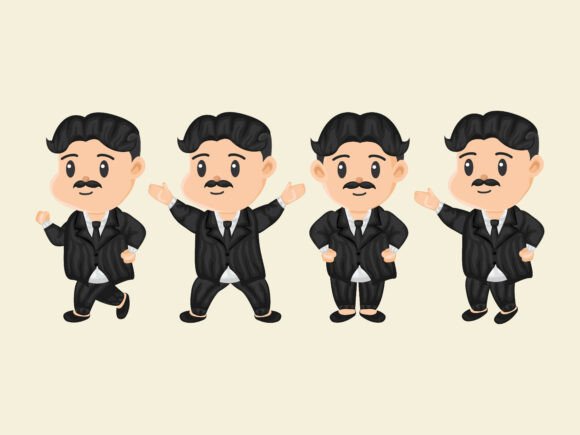
When we think of Nikola Tesla, the image that usually comes to mind is a stern, serious man with wild hair and intense eyes, often depicted in black-and-white photographs from the late 19th century. While historically accurate, this traditional imagery can sometimes feel distant or intimidating for modern learners. Enter the Nikola Tesla Cartoon Education Character, a creative reinterpretation designed to bridge the gap between complex scientific history and accessible learning. This character isn't just a drawing; it is a pedagogical tool that transforms the abstract concepts of electricity, magnetism, and alternating current into something visual, relatable, and engaging.
This approach moves beyond simple illustration. It represents a shift in how educational content is delivered across various platforms, from classroom whiteboards to digital marketing campaigns. By humanizing the inventor through a friendly, stylized lens, educators and creators can spark curiosity without the barrier of academic intimidation. The Nikola Tesla cartoon education character scientist hand drawing electricity teacher inventor theory serves as a versatile avatar that carries the weight of historical achievement while maintaining an approachable demeanor suitable for diverse audiences.
Visualizing Abstract Concepts Through Character Design
The primary utility of this character lies in its ability to visualize the invisible. Electricity and electromagnetic fields are notoriously difficult to explain using only text or static diagrams. A hand-drawn style allows for dynamic representation where energy flows can be exaggerated, colors can denote voltage levels, and expressions can convey the "aha!" moments of discovery.
In a practical setting, imagine a workshop on renewable energy. Instead of staring at a dense chart about AC power transmission, participants see a sketched version of Tesla holding a glowing coil, with lines of energy arcing safely around him. This visual shorthand helps adults grasp the mechanics of induction much faster. The character acts as a guide, walking the viewer through the theory step-by-step. For instance, when explaining the difference between DC and AC, the character might be drawn running along a wire (DC) versus dancing in a wave pattern (AC), making the theoretical distinction immediately obvious and memorable.
Real-World Applications in Corporate Training
Beyond the classroom, this concept finds significant traction in corporate training environments. Companies in the tech, engineering, and energy sectors often struggle to make safety protocols or technical overviews engaging for their workforce. Using a Nikola Tesla cartoon education character can soften the tone of mandatory training materials while retaining authority.
- Safety Briefings: A cartoon depiction of Tesla wearing safety gear while handling high-voltage equipment sets a positive example. It reinforces the idea that respect for electricity goes hand-in-hand with innovation.
- Product Launches: Tech startups often use this character in their branding to signal a connection to foundational innovation. It suggests that their new battery technology or wireless charging solution is built on the same visionary principles as the original inventor.
- Internal Communication: HR departments can use the character in newsletters to celebrate employee achievements in STEM fields, creating a culture that values creativity and problem-solving.
Engaging Adult Learners and Lifelong Students
Adults aged 20 to 50 often return to education with skepticism toward traditional methods. They value efficiency and relevance. A stiff lecture on the history of the lightbulb might lose their attention, but a narrative-driven video featuring a charismatic, animated Tesla explaining the race against Edison captures their interest. This demographic appreciates the blend of history and humor that a well-designed cartoon character provides.
For hobbyists and DIY enthusiasts, the character becomes a mentor figure. Online tutorials for building small-scale Tesla coils or understanding circuit boards often feature this persona in the corner of the screen, offering tips or warnings. It creates a sense of companionship in the learning process. When an adult learner encounters a frustrating bug in their code or a failed experiment, seeing the character shrug and say, "Even I blew up a lab once," normalizes failure as part of the scientific method.
Cross-Industry Versatility
The adaptability of the Nikola Tesla cartoon education character extends into industries far removed from pure science. In the gaming industry, developers use similar archetypes to create non-player characters (NPCs) who provide lore and technical quests. In the publishing world, graphic novels aimed at young adults use this style to retell the life of inventors, making biography reading less dry.
Marketing agencies also leverage this imagery to promote sustainability initiatives. A campaign focusing on electric vehicles might feature the character riding an early prototype of an EV, linking the past vision of clean energy with present-day solutions. This creates a powerful emotional hook, connecting the consumer's purchase decision to a legacy of progress rather than just a transaction.
Considerations Before Implementation
While the benefits are clear, integrating a Nikola Tesla cartoon education character requires careful planning. The goal is to enhance understanding, not to trivialize the subject matter. One common pitfall is oversimplification. If the character makes the science look too easy or magical, learners might miss the rigorous mathematical foundations required to master the field.
Creators must balance the whimsical nature of the drawing with factual accuracy. The "hand drawing" aspect should serve clarity, not obscure it. For example, when depicting the flow of electrons, the artistic style must still adhere to the laws of physics to avoid teaching misconceptions. Additionally, the tone of the character matters. He should be portrayed as a passionate, slightly eccentric genius, but one who respects the dangers of his work. This nuance ensures that the audience learns both the excitement of invention and the importance of safety.
Another consideration is the target audience's prior knowledge. A version of the character designed for a group of electrical engineers will need to reference specific theories and equations, whereas a version for a general audience should focus on broad concepts and historical impact. Customization is key to ensuring the character resonates effectively.
Strengths and Limitations
The strengths of this approach are undeniable. It increases retention rates by associating facts with a memorable visual identity. It lowers the cognitive load required to understand complex diagrams by providing a narrative context. Furthermore, it fosters an emotional connection to the material, turning passive observation into active engagement.
However, limitations exist. Not all subjects can be effectively taught through a single character archetype. Highly specialized topics may require more technical, less stylized visuals. There is also the risk of the character becoming a gimmick if not integrated thoughtfully into the curriculum or campaign. If the content lacks depth, the cartoon will simply highlight the superficiality of the material.
Ultimately, the Nikola Tesla cartoon education character is a powerful tool for those willing to use it correctly. Whether you are an educator trying to inspire the next generation of scientists, a corporate trainer looking to refresh your safety modules, or a content creator aiming to explain the future of energy, this character offers a unique pathway to connect with your audience. By blending the legacy of a true innovator with the accessibility of modern illustration, we can make the mysteries of electricity and invention available to everyone, regardless of their background.