The Knowledge Tree with Books Education Concept: A Visual Framework for Intellectual Growth
In the realm of educational design and academic branding, few symbols carry as much weight and versatility as the Knowledge Tree with Books Education Concept. This vintage illustration style, often rendered in black and white engravings or vector formats, transcends simple decoration. It serves as a powerful visual metaphor for the organic nature of learning, the accumulation of wisdom, and the structured growth of an institution or individual. For professionals ranging from university administrators to independent authors, understanding how to leverage this concept is not merely about selecting a logo; it is about aligning your brand identity with a timeless narrative of intellectual development.
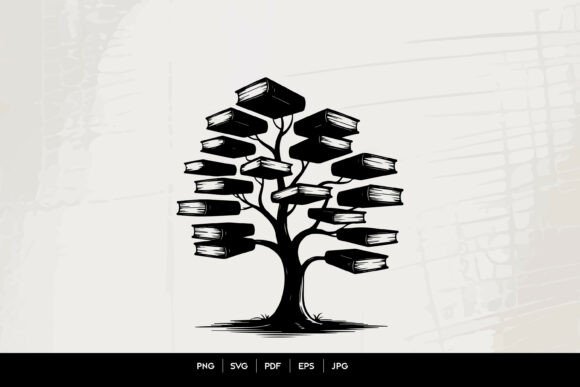
The imagery typically depicts a robust tree where books replace leaves or fruit, symbolizing that knowledge is the lifeblood of growth. Whether you are designing a curriculum guide, launching an online course, or establishing a new library system, this visual asset offers a cohesive way to communicate your mission. By integrating the Knowledge Tree with Books Education Concept into your workflow, you create an immediate association with scholarship, research, and the enduring value of literature.
Understanding the Symbolism and Design Utility
Before implementing any visual asset, it is crucial to understand its core message. The Knowledge Tree with Books Education Concept combines two distinct archetypes: the tree, representing life, stability, and expansion, and the book, representing recorded knowledge and study. When merged in a vintage engraving style, the result is an emblem that feels established, trustworthy, and classic. This aesthetic resonates deeply with audiences aged 20 to 50 who value tradition alongside modern utility.
This concept fits seamlessly into broader processes of institutional planning and personal branding. Unlike abstract geometric logos that can feel sterile, the organic lines of a tree suggest that education is a living process. It implies that learning is not a static event but a continuous cycle of reading, studying, and growing. For educators and content creators, this distinction is vital. It shifts the perception of their work from "delivering information" to "cultivating wisdom."
From a technical standpoint, the availability of this illustration in multiple formats—SVG, PNG, EPS, JPG, and PDF—ensures it can be adapted for various stages of a project. High-resolution vectors (EPS/SVG) are essential for print materials like brochures, diplomas, and signage, while raster formats (PNG/JPG) serve digital platforms such as websites, social media, and email newsletters. This versatility makes the asset a cornerstone of a comprehensive visual strategy.
Strategic Integration Before Project Launch
The most effective use of the Knowledge Tree with Books Education Concept occurs during the pre-planning phase of any educational or academic initiative. Before writing a single syllabus or recording a lecture, stakeholders must define the visual language of their project. This is where the concept acts as a strategic anchor.
Consider a scenario where a small business owner is launching a professional certification program. In the initial brainstorming sessions, adopting the tree motif helps clarify the program's structure. Just as a tree has roots, trunk, and branches, the curriculum can be mapped out similarly. The "roots" represent foundational theory, the "trunk" is the core methodology, and the "branches" are the specialized modules. Using the Knowledge Tree with Books Education Concept as a visual aid during these meetings fosters a shared understanding among team members regarding the scope and depth of the material.
Furthermore, this stage involves selecting the right file formats for future scalability. If the project intends to expand globally or partner with universities, securing high-quality EPS and PDF files early prevents quality degradation later. It ensures that when the brand moves from a digital mockup to a physical textbook cover or a campus banner, the intricate details of the vintage engraving remain crisp. This proactive approach to asset management saves time and resources during the execution phase.
Defining Brand Identity and Audience Connection
During the preparation phase, the choice of a vintage style over a modern flat design signals specific values to the target audience. For adults seeking advanced degrees, professional development, or deep-dive literary analysis, the retro design evokes a sense of prestige and seriousness. It suggests that the content provided is not fleeting trend-based information but rather enduring scholarship.
Marketers and bloggers can use this concept to differentiate their content in a crowded digital space. While many competitors opt for bright, neon-infused graphics, the black and white aesthetic of the Knowledge Tree with Books Education Concept stands out through its sophistication. It appeals to the desire for quality and authenticity, traits highly valued by entrepreneurs and lifelong learners alike.
Implementation During Execution and Content Creation
Once the planning phase is complete, the Knowledge Tree with Books Education Concept transitions from a strategic idea to a functional tool in the daily workflow. Its application spans across various mediums, ensuring consistency in communication.
For publishers and authors, this illustration serves as an ideal chapter header or section divider. The vintage engraving style complements text-heavy documents without distracting from the content. It provides visual breathing room while reinforcing the theme of the book. In digital workflows, using the SVG version allows designers to scale the image for responsive web design, ensuring it looks perfect on both mobile devices and large desktop monitors.
Educators can integrate the concept into their teaching materials. Imagine a slide deck for a university seminar where the title slide features the Knowledge Tree with Books Education Concept. As the presentation progresses, the tree can be used metaphorically to map out the semester's journey. Each week's topic becomes a branch, and key readings become the leaves. This visual continuity helps students retain information by associating abstract concepts with a concrete, memorable image.
Freelancers and consultants also benefit from this asset when creating proposals and reports. Including the logo or icon in the footer of a research document adds a layer of professionalism. It signals to the client that the work is grounded in rigorous study and reliable sources. The consistent use of the academic design element builds trust and reinforces the consultant's expertise in their field.
Workflow Efficiency and Asset Management
To maximize efficiency, teams should establish a centralized repository for these assets. Having organized folders containing the PNG, JPG, and PDF versions ensures that anyone on the team can access the correct file for their specific task without delay. This organization is critical for maintaining quality control. It prevents the common pitfall of resizing low-resolution images, which can ruin the delicate lines of a vintage illustration.
Moreover, the versatility of the clipart allows for creative variations. Designers can extract individual elements, such as a single book or a cluster of leaves, to create secondary icons for social media posts or email signatures. This modularity extends the lifespan of the asset and keeps the brand fresh without requiring a complete redesign.
Post-Project Evaluation and Long-Term Brand Equity
After a project concludes, the impact of the Knowledge Tree with Books Education Concept continues to resonate. In the post-launch phase, the focus shifts to brand equity and long-term recognition. A well-executed visual identity becomes synonymous with the quality of the service or product offered.
For institutions, the longevity of this symbol is a significant advantage. Unlike trendy graphic styles that may date quickly, the classic engraving style remains relevant for decades. This ensures that the investment in the design yields returns for years to come. Alumni associations, for example, can continue to use the same emblem on merchandise and reunion materials, fostering a sense of continuity and belonging among graduates.
Evaluating the effectiveness of the visual strategy involves looking at engagement metrics and brand recall. Did the vintage aesthetic help the content stand out? Did it convey the intended message of wisdom and growth? Feedback from users often highlights the perceived authority of the brand, a direct result of the chosen imagery. The literature symbol effectively communicates that the organization values depth and substance.
Sustaining Consistency Across Platforms
Maintaining consistency is key to long-term success. Whether the brand expands into new markets or launches additional courses, the Knowledge Tree with Books Education Concept should remain the central visual pillar. This requires strict adherence to brand guidelines regarding color usage, spacing, and file formats. Even as the business evolves, the core symbol provides a stable foundation.
For individuals building a personal brand, such as authors or thought leaders, this concept offers a way to unify diverse outputs. A blog, a podcast, and a speaking tour can all share the same visual identity, creating a cohesive experience for the audience. The education symbol acts as a stamp of approval, assuring followers that every piece of content meets a high standard of intellectual rigor.
Practical Tips for Seamless Integration
To successfully integrate the Knowledge Tree with Books Education Concept into your workflow, consider the following practical observations:
- Start with Vector Files: Always begin with the EPS or SVG versions. These allow for infinite scaling without loss of quality, which is essential for both large banners and tiny favicons.
- Respect the Negative Space: Vintage engravings rely heavily on contrast. Ensure there is sufficient white space around the illustration to let the intricate details breathe. Cluttered backgrounds can obscure the fine lines of the design.
- Adapt for Digital Interactivity: On websites, use the SVG format to enable hover effects or subtle animations. This modernizes the vintage look while preserving its classic appeal.
- Combine with Modern Typography: Pair the retro illustration with clean, sans-serif fonts. This juxtaposition creates a balanced aesthetic that feels both timeless and contemporary.
- Standardize Usage: Create a style guide that dictates exactly how the logo should be used. This includes minimum sizes, color variations, and prohibited alterations to ensure the integrity of the academic design.
By treating the Knowledge Tree with Books Education Concept as a dynamic tool rather than a static image, professionals can enhance their projects at every stage. From the initial spark of an idea to the final delivery of a product, this symbol serves as a constant reminder of the value of knowledge, the importance of study, and the endless potential for growth. It is more than just an illustration; it is a statement of purpose that aligns perfectly with the goals of educators, creators, and visionaries dedicated to the pursuit of wisdom.