Hand-Drawn Education Lifestyle Icons: The Rise of Minimalist Doodles in Modern Design
In the rapidly evolving landscape of digital communication, the visual language we use to convey complex ideas is shifting. There is a growing fatigue with sterile, hyper-realistic graphics and rigid corporate templates. In response, a distinct aesthetic has emerged that bridges the gap between professional utility and human warmth: the hand-drawn minimalist icon. Specifically, collections like Hand-Drawn Education Lifestyle Icons have become essential tools for designers, educators, and content creators who need to communicate concepts related to school, science, and daily life without sacrificing personality. These vector sets do more than just decorate; they fundamentally alter how information is perceived, making dense data feel approachable and organic.
The Psychology of Imperfection in Digital Interfaces
The appeal of a doodle style is rooted in cognitive psychology. When users encounter a perfectly symmetrical, computer-generated shape, their brain processes it as artificial. However, when presented with a line that wavers slightly or a circle that is not mathematically perfect, the brain registers it as human-made. This subtle imperfection triggers a sense of trust and relatability. For sectors like education and home lifestyle, where the subject matter is deeply personal and experiential, this connection is vital.
Hand-Drawn Education Lifestyle Icons leverage this psychological principle by mimicking the look of a quick sketch made with a pen on paper. Whether depicting a microscope for a science project or a coffee mug for a morning routine, the doodle style suggests immediacy and authenticity. It strips away the intimidation often associated with academic or technical subjects. A student looking at an infographic about cellular biology is more likely to engage if the cells are illustrated as friendly, sketched circles rather than cold, clinical diagrams. Similarly, parents browsing a guide on nursery decor find comfort in furniture icons that look like they were drawn by a friend rather than manufactured by a corporation.
Bridging the Gap Between Complex Data and Human Understanding
One of the primary challenges in modern design is simplifying complexity without losing accuracy. Infographics, educational worksheets, and user interface elements often require a vast array of symbols to represent different categories. A massive collection of hand-drawn minimalist icons solves this by providing a cohesive visual vocabulary. Instead of mixing stock photos, 3D renders, and flat vectors—which creates visual dissonance—designers can pull from a single bundle to ensure consistency.
This consistency is particularly important when covering diverse topics within a single project. Imagine a blog post about "A Day in the Life of a Scientist." The narrative might move from waking up (home lifestyle), to commuting (transport vehicles), to working in the lab (laboratory tools), and finally to relaxing with music (musical instruments). Using a unified set of Hand-Drawn Education Lifestyle Icons allows these disparate elements to flow together seamlessly. The viewer's eye is not distracted by clashing styles; instead, they focus entirely on the narrative being told.
Core Categories Within the Minimalist Doodle Ecosystem
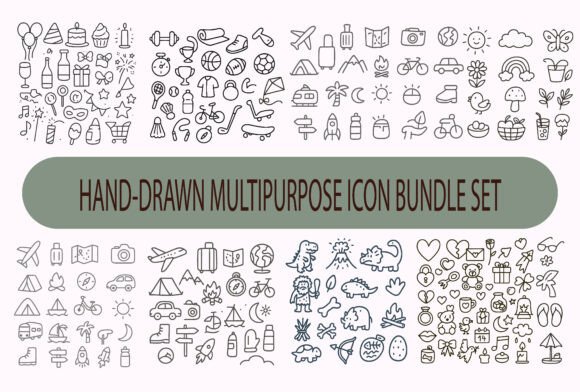
To understand the versatility of these assets, one must examine the specific themes they cover. A comprehensive bundle typically includes four major pillars: education, science, music, and home lifestyle. Each category serves a unique function in the creative workflow.
Education and School Supplies
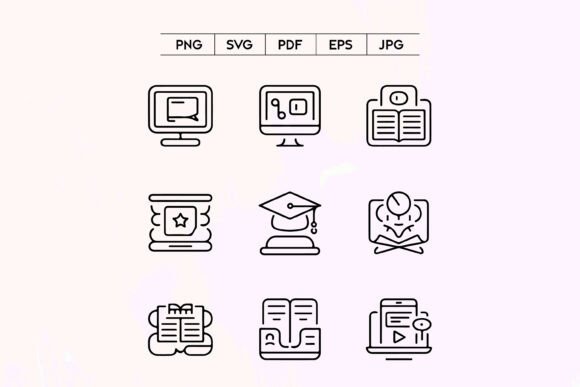
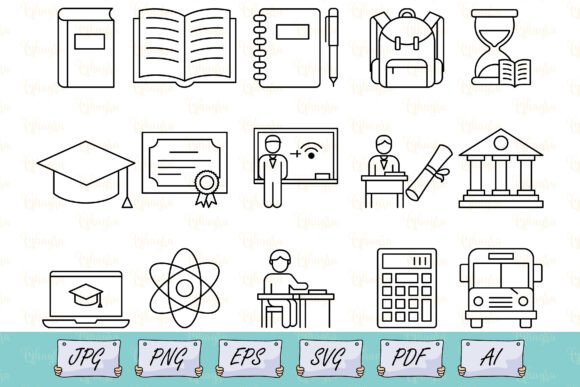
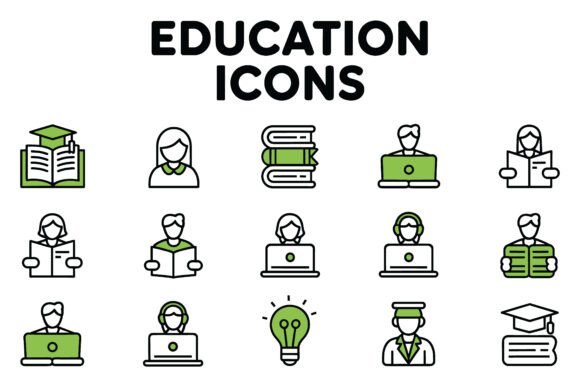
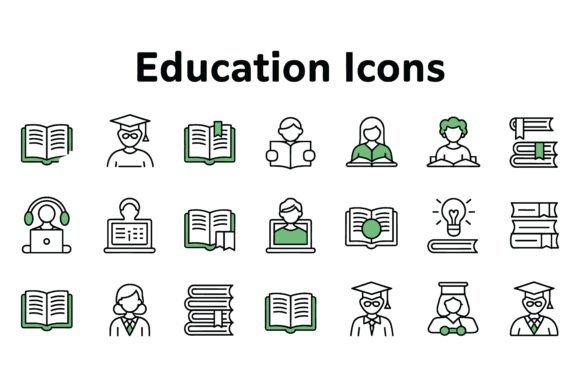
The education sector is perhaps the most prolific consumer of doodle-style graphics. Teachers creating lesson plans, publishers designing workbooks, and app developers building learning games all rely on clear, recognizable symbols. Standard items like pencils, notebooks, globes, and graduation caps are staples. However, modern bundles go deeper, including abstract concepts represented through simple visuals, such as lightbulbs for ideas, gears for problem-solving, and books for knowledge. The minimalist nature of these drawings ensures they remain legible even when scaled down for mobile screens or printed on small flashcards.
Science and Laboratory Tools
Science communication often suffers from being overly dense. By utilizing hand-drawn illustrations of beakers, microscopes, DNA strands, and atoms, creators can inject a sense of wonder into STEM education. The doodle style demystifies the equipment. A petri dish drawn with a rough, ink-like stroke feels less like a dangerous bio-hazard and more like a tool for discovery. This approach is particularly effective for younger audiences or for introducing scientific concepts to the general public through social media infographics.
Music and Creative Arts
Musical instruments, from violins to synthesizers, are naturally expressive objects. Representing them in a doodle style captures the rhythm and fluidity of music itself. Unlike rigid geometric shapes, the flowing lines of a hand-drawn guitar or piano keys suggest movement and sound. These icons are invaluable for event planners, music teachers, and cultural organizations looking to create vibrant promotional materials that reflect the energy of the arts.
Home Lifestyle and Daily Routines
The "home" aspect of these bundles covers a wide spectrum of daily living. From furniture and kitchenware to fitness gear and transport vehicles, these icons help visualize the mundane aspects of life in an engaging way. For interior designers, a collection of sketched sofas and lamps can serve as mood board elements. For wellness coaches, icons representing yoga mats, dumbbells, and healthy food can illustrate workout routines or diet plans. The key here is the "lifestyle" element; these icons tell a story about how people live, work, and play.
Practical Applications Across Industries
The utility of a Hand-Drawn Education and Home Lifestyle Icon Bundle extends far beyond simple decoration. It is a functional asset that drives engagement and clarity across various industries.
- Educational Materials: Teachers and curriculum developers use these vectors to break up text-heavy documents. A worksheet filled with paragraphs can be transformed into an interactive activity by replacing bullet points with relevant doodles. For example, a list of safety rules in a chemistry lab becomes more memorable when each rule is paired with a corresponding hand-drawn hazard symbol.
- Infographics and Data Visualization: Data analysts often struggle to make charts and graphs interesting. Integrating minimalist doodles as data markers or section headers adds a layer of visual interest that retains viewer attention. A timeline of historical events, for instance, can use transport vehicle icons to represent different eras of travel, making the progression of history tangible and fun.
- Nursery and Children's Decor: Parents and interior decorators frequently seek wall art that stimulates imagination without overwhelming a child's senses. Hand-drawn icons are perfect for this purpose. They can be printed on canvas, used as decals, or incorporated into fabric designs for curtains and bedding. The soft, sketchy lines are gentle on the eyes and fit well with pastel color palettes common in nurseries.
- Creative Web Design: In the realm of web development, these icons serve as excellent UI elements. Buttons, loading animations, and error messages can all benefit from a touch of personality. A "404 Page Not Found" error page featuring a confused hand-drawn character holding a magnifying glass is far more forgiving and brand-friendly than a standard system alert.
Workflow Integration for Professionals
For graphic designers and content creators, efficiency is paramount. The ability to access a massive collection of pre-designed vectors saves hours of manual illustration time. Instead of drawing a bicycle from scratch for a transportation-themed article, a designer can select a high-quality vector from the bundle, adjust its stroke width, and apply a brand-specific color palette. Because these are vector files, they are infinitely scalable. Whether the icon needs to be the size of a favicon or a billboard, the resolution remains crisp and clean.
This flexibility supports agile workflows. When a client requests changes to a presentation deck, swapping out a generic clip-art image for a cohesive doodle icon takes seconds. Furthermore, the minimalist nature of the style means the icons do not compete with typography. They sit comfortably alongside sans-serif fonts, enhancing readability rather than obscuring it.
Considerations for Implementation and Customization
While the benefits of using Hand-Drawn Education Lifestyle Icons are significant, successful implementation requires thoughtful consideration. The "hand-drawn" aesthetic relies heavily on context. If placed in a setting that demands extreme precision, such as a medical surgical guide or a legal contract, the informal style may undermine the seriousness of the content. Therefore, it is crucial to assess the tone of the project before selecting this visual language.
Color theory also plays a pivotal role. While many bundles come in black and white or grayscale, the true power of these icons lies in their adaptability. Designers should experiment with limited color palettes to maintain the minimalist feel. Over-saturating a delicate doodle with neon colors can destroy its charm. Instead, using muted tones, pastels, or earthy hues often complements the organic nature of the sketches. Consistency in stroke weight is another technical detail to watch; ensuring that all selected icons share a similar line thickness prevents the design from looking disjointed.
The Future of Organic Digital Design
As artificial intelligence and automation continue to generate perfect, uniform content, the value of the "human touch" will only increase. Audiences are becoming increasingly adept at spotting synthetic content, leading to a preference for designs that feel authentic and crafted. The trend toward Hand-Drawn Education Lifestyle Icons is not merely a passing fad but a reflection of a broader desire for connection in the digital space.
We are seeing a shift where brands and institutions are adopting these styles to humanize their messaging. Schools are updating their websites to look less bureaucratic and more inviting. Tech companies are using doodles in their documentation to reduce user anxiety. Even government agencies are experimenting with sketched illustrations to make public health information more accessible. This widespread adoption suggests that the minimalist doodle style has secured its place as a staple in modern visual communication.
Ultimately, the choice to use a Hand-Drawn Education and Home Lifestyle Icon Bundle is a choice to prioritize the audience's experience. It signals that the creator cares about engagement, clarity, and emotional resonance. By blending the rigor of vector technology with the warmth of hand illustration, these tools empower professionals to create content that is not only informative but also inspiring. Whether you are a teacher planning a lesson, a developer building an app, or a business owner crafting a brand identity, embracing the imperfect beauty of the doodle style offers a powerful way to connect with your world.